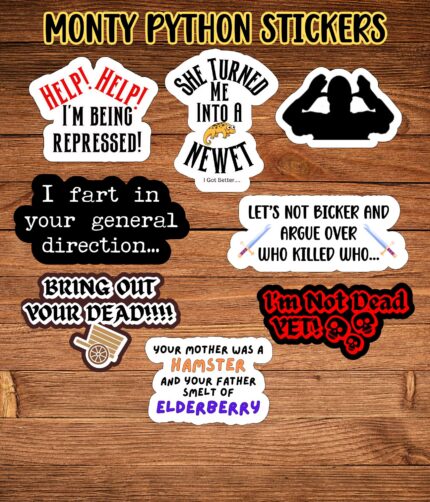
If you’ve ever quoted “It’s just a flesh wound,” argued about whether a parrot was resting, or burst into “Always Look on the Bright Side of Life” at a wildly inappropriate moment—congratulations. You’re part of the Monty Python legacy.
More than half a century later, Monty Python isn’t just comedy history. It’s core nerd culture. From memes and movies to mugs and stickers, the influence of Monty Python is everywhere—and it shows no signs of fading away.
So why does Monty Python still matter? And how did six British weirdos permanently change comedy forever? Let’s take a slightly silly, very NerdFAd look.
Monty Python’s Flying Circus: Comedy With No Rules
Monty Python began in 1969 with Monty Python’s Flying Circus on the BBC. Instead of tidy jokes with neat punchlines, the show leaned hard into absurd humor, surreal visuals, and sketches that sometimes… just stopped.
There were no laugh tracks. No apologies. No explanations.
What you got was:
- Dead parrots
- Knights who refuse to die
- Bureaucrats arguing in increasingly ridiculous ways
- Terry Gilliam’s wildly unhinged animations
At a time when comedy followed strict formulas, Monty Python smashed them all with a rubber chicken.
Absurd Humor That Trusted the Audience
One of the biggest reasons Monty Python’s comedy still works today is that it assumed the audience was smart.
Their jokes referenced:
- Philosophy
- Politics
- Religion
- History
- Language itself
And they never stopped to explain the joke. You either got it—or you laughed later when it finally clicked.
This approach shaped modern comedy as we know it. Without Monty Python, we probably wouldn’t have The Simpsons, South Park, Rick and Morty, or that one friend who insists anti-humor is “actually brilliant.”
Monty Python Movies: Cult Classics for a Reason
Monty Python and the Holy Grail (1975)
If nerd culture had a sacred text, Holy Grail would be in the running. It took Arthurian legend and turned it into a masterclass in low-budget genius and high-concept absurdity.
Coconut horses. Killer rabbits. Knights who argue about shrubbery.
It’s endlessly quotable, endlessly rewatchable, and still one of the most beloved comedy films of all time.
Life of Brian (1979)
Life of Brian proved Monty Python wasn’t afraid of controversy—or thinking deeply. The film skewered blind faith, groupthink, and authority while managing to be hilarious the entire time.
Despite protests at release, it’s now widely considered one of the greatest comedy films ever made. And yes, “Always Look on the Bright Side of Life” is still emotionally confusing in the best possible way.
The Meaning of Life (1983)
Weirder. Darker. Less cuddly.
The Meaning of Life tackled birth, death, war, and consumerism with sketches that ranged from brilliant to deeply unsettling. It’s not everyone’s favorite—but it’s pure Monty Python, unfiltered and fearless.
Why Monty Python Is Still Everywhere
Monty Python didn’t fade away. It infected pop culture.
You see it in:
- Internet memes
- Geek conventions
- D&D tables
- Musical theater (Spamalot)
- Everyday sarcasm
Even people who’ve never watched an entire Monty Python episode still quote them—sometimes without realizing it.
That’s legacy.
Monty Python and the Heart of NerdFAd
At NerdFAd, we love things that are:
- Passion-driven
- Slightly ridiculous
- Deeply beloved by fans
Monty Python checks every box.
It’s humor for people who love references, inside jokes, and the joy of finding others who get it. The kind of fandom where a single phrase on a mug or sticker instantly sparks a conversation.
Why Monty Python Still Matters Today
In a world full of recycled jokes and algorithm-friendly humor, Monty Python reminds us that weird is wonderful. That comedy doesn’t have to be safe. That sometimes the best response to life’s nonsense… is even bigger nonsense.
And honestly? We could all use more of that.
So whether you’re a lifelong fan or just discovering why everyone keeps yelling about the Spanish Inquisition, one thing is certain:
Monty Python’s legacy is very much alive.
And it’s still not dead.
It’s just… resting.